

Public Policy Research Group, London, UK
Ahmed Aber, Tahir Shaaran
Iraq’s rural housing crisis is not a temporary shortfall but a permanent structural condition. Decades of attempting to extend centralised electricity grids, piped water networks, and sewerage systems to dispersed rural settlements have failed, and will continue to fail, for reasons of geography, economics, and governance. This paper proposes an alternative paradigm: a decentralised, technologically integrated model in which the rural dwelling becomes a self-sufficient habitat unit generating its own electricity, treating its own water, and processing its own waste. The strategy assigns the Iraqi state a new role as market-maker and regulator, whilst positioning the private sector as the primary engine of delivery through Energy as a service models, containerised utility systems, and advanced construction technologies including 3D concrete printing. The paper outlines a phased implementation pathway anchored by a "Green Rebuild" pilot in climate-affected rural areas, and includes a critical appraisal identifying areas for further development. It argues that the technologies, financing mechanisms, and institutional models to transform Iraq’s rural housing already exist. What is required is strategic vision and political will.


1. Introduction: Why the Old Model Has Failed
To understand the solution, one must first understand the problem. Iraq’s rural population, millions of citizens scattered across thousands of small settlements, marshland hamlets, and agricultural villages has been systematically underserved by the centralised infrastructure model that has governed national development planning for decades.
The evidence of this failure is overwhelming. Iraq’s national electricity grid delivers power to rural households for only a few hours each day, where it reaches them at all. The resulting dependence on neighbourhood diesel generators constitutes a regressive energy tax on the rural poor an unregulated, polluting, and expensive informal market. Rural water supply is predominantly drawn from contaminated shallow wells, untreated surface water, or costly water trucking operations of uncertain quality. Sanitation infrastructure is virtually non-existent: pit latrines are the default technology, and open defecation persists in the most marginalised communities. The public health consequences include recurrent cholera outbreaks, with rural areas serving as both origin and amplifier.
The physical housing stock compounds these deficits. Traditional mud-brick construction is vulnerable to flash floods. Modern concrete-block structures, built without insulation or damp-proofing, are thermally unfit for Iraq’s extreme summers and winters. Critically, tenure insecurity much rural housing is built on land without formal title discourages any investment in durable improvements.
The most dramatic measure of this crisis is displacement. As of September 2025, the International Organisation for Migration recorded 31,001 families (186,006 individuals) displaced due to climatic factors across 12 Iraqi governorates. Nearly half of these families originated from Thi-Qar Governorate alone. These are communities that have become literally uninhabitable.
Why has the state been unable to respond? Four structural causes are identified. First, hyper-centralisation: fiscal resources and decision-making are concentrated in Baghdad, starving provincial and district councils of capacity. Second, the resource curse: oil revenues enabled the state to neglect agriculture, destroying the economic foundation of the countryside. Third, conflict cycling: decades of war have repeatedly destroyed whatever infrastructure existed, with reconstruction focused on cities. Fourth, data poverty: the long-delayed national census has deprived planners of basic information. One cannot plan what one cannot see.
The centralised model will never serve rural Iraq. The distances are too great, the population density too low, and the institutional capacity too weak. This conclusion, however, is not cause for despair. It is the foundation for an entirely different approach one that this paper develops in full.
2. The Enabling State: A New Role for Government
The state-led, centralised model has failed. But the absence of the state is no solution. The required shift is from the state as builder and operator to the state as regulator, financier, and market aggregator.
2.1 Aggregating Demand and De-risking Investment
The single greatest barrier to private sector engagement in rural infrastructure is the fragmentation of demand. A solar company cannot profitably market, finance, and maintain individual systems for thousands of scattered households. The transaction costs are prohibitive.
The state can solve this through a "Rural Habitat Aggregation Facility." The mechanism is straightforward: government, through its provincial and district offices, conducts systematic surveys of rural settlements to establish demand for integrated energy-water-sanitation systems. It then bundles this demand into large-scale procurement tenders—for example, a single contract for 1,000 solar home systems across 20 villages and issues performance-based contracts to private consortia. The state bears the cost of aggregation and procurement; the private sector bears the cost of equipment, installation, and maintenance. This is precisely the model reflected in the FAO’s 2025 tender for 100 integrated solar-battery-reverse osmosis systems in Thi-Qar Governorate, which bundled individual household systems into a single procurement with clear technical specifications and performance requirements.
2.2 Setting the Green Code
The state retains a critical regulatory function: establishing minimum standards that create a predictable market for green technologies. This paper recommends a "Rural Habitat Code" mandating net-zero water and energy readiness for any housing receiving public subsidy or built on newly serviced land.
The code would specify technical standards for solar generation capacity, battery storage, water capture and treatment, and sanitation systems appropriate to different climatic zones. Compliance would be a condition of access to state guarantee and subsidy mechanisms. A uniform regulatory floor transforms the rural housing market from a collection of ad hoc solutions into a standardised, scalable investment opportunity.
2.3 Financing the Transition
Capital expenditure for decentralised systems is front-loaded; operational expenditure is low. This profile is poorly suited to household-level financing but well-suited to a blend of public, private, and climate finance.
This paper proposes a "Rural Habitat Guarantee Fund" providing first-loss guarantees to private lenders, capital subsidies for the poorest households, and a ring-fenced percentage of oil revenues as a sovereign contribution to rural infrastructure. The Iraq National Housing Policy 2025–2030 already envisions a diversified housing finance ecosystem, recommending simplified loan procedures, dedicated credit lines, and partnerships between government and private banks. The Guarantee Fund would operationalise these principles specifically for decentralised rural infrastructure.
International climate finance particularly the Green Climate Fund, which has already committed $39 million to climate-resilient agriculture in southern Iraq represents an additional funding stream. Rural housing with integrated solar-water-sanitation systems is a climate adaptation measure as much as an infrastructure investment. Iraq should aggressively pursue the concessional financing available for such purposes.
3. The Integrated Technology Package
The core of this proposal is the integration of multiple technologies into a single, coherent system centred on the rural dwelling. The house becomes the infrastructure.
3.1 Energy: The Solar-Battery Hub
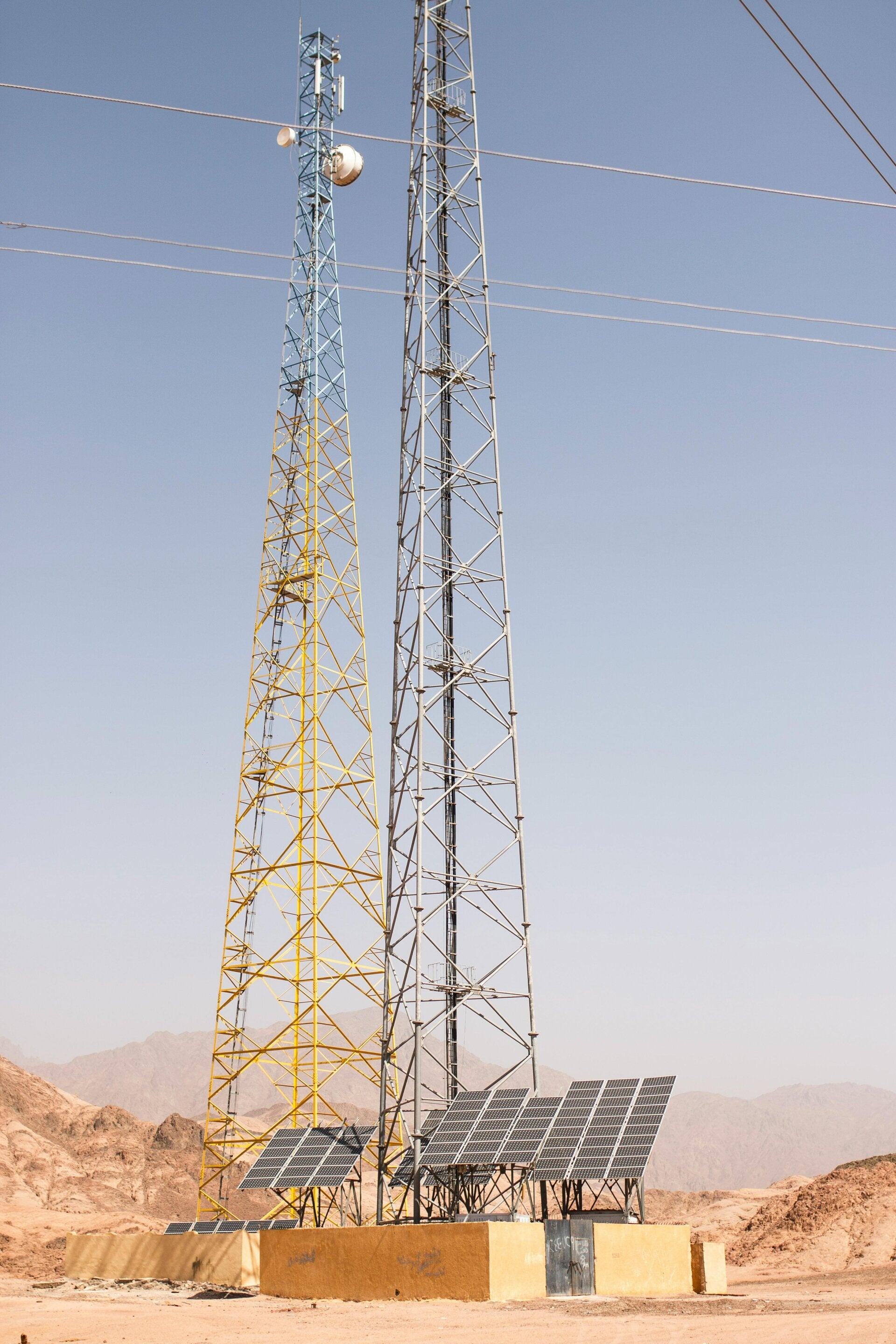
The economics of rural electrification have been transformed by advances in solar PV and lithium-iron-phosphate batteries. Systems are now affordable, reliable, and capable of providing the level of service lights, refrigeration, device charging, water pumping that rural households require.
The FAO’s Thi-Qar procurement provides a concrete technical benchmark: 3kW solar PV with 5kWh battery storage, hybrid inverter, and full mounting hardware, tendered with explicit standards (IEC 61215, IEC 61730) and a requirement for a two-year maintenance agreement. This is not a pilot concept; it is an active procurement. Scaling this model from 100 households to 100,000 requires only the demand aggregation and financing mechanisms described above. The technology is ready.
3.2 Water: Purification, Desalination, and Smart Delivery
Rural Iraq presents two distinct water challenges. In the north, groundwater is available but often contaminated. In the south, salinisation renders groundwater undrinkable and surface water unreliable.
The FAO tender points the way forward: its specification integrates reverse osmosis purification directly with the solar-battery system, enabling household-level production of potable water from brackish sources without grid electricity. For drinking water specifically, atmospheric water generators which extract humidity from the air using solar-powered cooling offer a supplementary source particularly suited to the humid marshland environment.
For larger-volume water needs, this paper recommends a regulated private utility model. Companies would operate IoT-enabled storage tanks at the household level, monitoring fill levels remotely and dispatching tanker trucks on optimised routes. The household pays a subscription; the company is bound by quality standards and performance metrics. This replaces the current unregulated, extractive water trucking market with a transparent, accountable service.
3.3 Sanitation: The Non-Sewered Circular System
The most radical departure from the centralised model is in sanitation. Rather than attempting to build sewerage networks, this proposal endorses containerised, non-sewered sanitation systems at the household or small cluster level.
These include biodigesters that convert human waste into biogas for cooking and fertiliser for agriculture, as well as modern incinerating toilets. The private sector manufactures, installs, and maintains the units under long-term contracts. Households pay a fraction of the health and environmental costs they currently bear, and receive usable outputs fuel and fertiliser in return.
3.4 Housing Construction: The 3D Printing Opportunity
3D concrete printing technology has advanced rapidly, with demonstrated applications in post-conflict and remote-area construction. For the Iraqi countryside, a 3D-printed house offers speed (printing a basic dwelling in days), design integration (conduits and plumbing channels printed directly into walls), thermal performance through complex geometries, and material efficiency.
However, a critical regulatory barrier exists. An Iraqi legal study examining construction contracts using 3D printing technology concludes that the general rules of the Iraqi Civil Code particularly the separation of design from execution are "insufficient to accommodate the unity of 'design and machine'" inherent in 3D-printed construction. The study proposes a sui generis regulatory framework that redefines engineering obligations. This finding validates that 3D printing deployment in Iraq requires parallel regulatory modernisation. Building codes would need updating, and contracting frameworks would need adaptation.
This paper recommends a "Green Rebuild" pilot that addresses both the technical and regulatory dimensions: a competitive tender for a private consortium to deliver 500 fully integrated, off-grid, 3D-printed houses in a climate-affected rural area such as Thi-Qar, where 46 per cent of Iraq’s climate-displaced families originate. The pilot would include a research partnership with an Iraqi engineering university to develop locally appropriate concrete mixes and test regulatory pathways. This would position Iraq as a globally visible exemplar of sustainable post-conflict reconstruction whilst building domestic institutional capacity for wider deployment.
4. Implementation Pathway
4.1 Phase One: The Green Rebuild Pilot (2026–2027)
The pilot phase targets a single, high-visibility project: 500 integrated, off-grid, 3D-printed houses in a climate-affected rural area. The government issues a competitive tender with explicit green technology requirements. A blended capital stack combining climate finance grants, development bank loans, and private consortium equity funds the project. Household subscriptions for ongoing energy-water-sanitation services create a revenue stream that makes the model financially self-sustaining after the initial capital investment.
4.2 Phase Two: Market Building (2027–2029)
Lessons from the pilot inform scaling. The state conducts systematic rural settlement surveys and issues bundled procurement tenders for 10,000+ household systems. The Rural Habitat Code becomes mandatory for publicly supported housing. Domestic companies develop manufacturing, installation, and maintenance capacity, creating a new green industry sector and employment for the technical graduates Iraq’s universities produce each year. The National Housing Policy’s recommendations for supporting MSME contractors dedicated credit lines, capacity building programmes, and streamlined procurement—are operationalised.
4.3 Phase Three: National Scale (2029–2035)
With the enabling framework established, the private sector drives expansion towards the national scale. The state’s role shifts from direct procurement to regulation and quality assurance. The rural housing market transforms from a sector defined by deprivation and dependence into one defined by autonomy, resilience, and environmental sustainability.
5. Conclusion: The Rural Habitat as a National Project
This paper has argued that the technologies, financing mechanisms, and institutional models to transform Iraq’s rural housing already exist. Solar panels are being procured. Batteries are being deployed. The private sector already builds an estimated 80–90 per cent of Iraq’s new housing. What is required is strategic vision to integrate these elements into a coherent system, and political will to redefine the relationship between the Iraqi state and its rural citizens.
The alternative is the continuation of the current trajectory: an endless wait for grid connections that will never materialise, dependence on extractive informal markets, and the steady erosion of rural life. Iraq’s countryside deserves better. The tools to build better are now available. The choice to use them is a political one.
References
-
FAO/United Nations Procurement. (2025). *Project 2025/FNIRQ/FNIRQ/132646: Procurement of 100 Sets of 3kW Solar PV Systems with Battery Storage and RO Water Purification for Thi-Qar Governorate, Iraq.
-
International Organization for Migration (IOM). (2025, November). Climate-Induced Displacement in Central and Southern Iraq. IOM Iraq.
-
United Nations in Iraq. (2025, 14 October). Remarks by DSRSG/RC for Iraq, Ghulam Isaczai, at the launch of the Iraq National Housing Policy.
-
United Nations in Iraq. (2025, 25 September). Iraq Strengthens National Efforts to Improve Living Conditions in Informal Settlements.
-
Ministry of Construction, Housing and Public Municipalities & UN-Habitat. (2025). Iraq National Housing Policy 2025–2030.
-
Arab Reform Initiative. (2025, 24 September). Beyond a Technocratic Solution: Iraqi Farmers and Local Climate Adaptation.
-
Gatea, H.S. (2026, May). The Legal Regulation of Construction Contracts Using Three-Dimensional Printing Technology (A Comparative Study). Ashur Journal of Legal and Political Studies.
-
Economic Research Forum / Central Statistical Organization. (2012). Iraq Household Socio-Economic Survey, IHSES 2012*.
Add comment
Comments